
One letter at a time · Original
Poople Guide: Word Ladder Rules and Routes
Every path ends at POOP.
EDITOR'S TAKE
The fixed finish turns a word ladder into a little route-planning problem. Every move feels useful when the path starts to open.
Twelve-word challenge · Word game

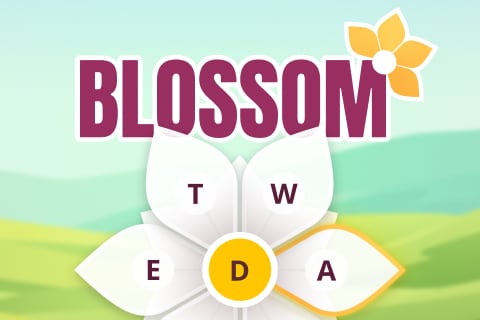 Blossom Word Game
THE ORIGINAL DAILY GAME
Seven letters. Just twelve words to make them count. The original game opens on its publisher’s website in a new tab.
THE SHORT VERSION
Merriam-Webster’s Blossom asks you to build twelve words from seven letters. Longer words earn more, while bonus letters and pangrams add points. The twelve-word limit makes choosing which words to submit more important than finding every possible short word.
| Goal | Make twelve high-scoring words from seven letters. |
|---|---|
| Category | Word games |
| Letter pool | 7 letters |
| Words to make | 12 |
| Extra points | Bonus letters and pangrams |
| Where to play | Blossom Word Game on the publisher’s website |
WHY WE PUT IT ON THE SHELF
Twelve slots make every little word feel like a decision. Holding back for a longer find is the satisfying part of this flower.
Every path ends at POOP.
The fixed finish turns a word ladder into a little route-planning problem. Every move feels useful when the path starts to open.

Find a word between your best guesses.
A smart change of pace from Wordle: you are narrowing a space, not chasing letter colors. The best guesses feel wonderfully surgical.

Follow meaning until the word clicks.
The joy is in following a strange thought trail until one word suddenly makes the whole map make sense.

Guess the diagnosis, one clue at a time.
The case format makes every extra clue feel earned. It is more about weighing evidence than pretending to be a doctor.
Solve sixteen Wordle-style boards in twenty-one guesses.
Sixteen boards sound absurd until the same good opener lights them all up. The satisfying part is deciding which half-solved word deserves your next guess.

Six tries to find the daily five-letter word.
The whole pleasure is one more informed guess. Six rows is enough for a small ritual, and the colored grid is easy to share without explaining the rules again.
Blossom is Merriam-Webster’s seven-letter word game with a very particular constraint: you make only twelve words. Longer entries score better, and bonus letters and pangrams bring extra points. This guide focuses on that choice of twelve. It is not an answer list, a copy of the playable board, or a claim that every word you can imagine will be accepted.
“Longer words score better”
The publisher describes seven letters, twelve words, and extra points for bonus letters and pangrams. The suggestions on this page are independent strategy advice.
The publisher describes Blossom as a game in which seven letters are used to make twelve words. That is the rule that changes the feel of the puzzle. In an open-ended word hunt, finding one more short word is almost always useful. Here, each submitted word takes one of a limited number of places, so the quality of an entry matters. Look over the letter set before committing the first obvious three- or four-letter answer.
Blossom is a better fit for someone who enjoys selecting a strong answer from several possibilities than for someone who simply wants to clear a dictionary list. You can make progress with modest words, but a page of quick little entries may leave score on the table. Keep a few candidate words in mind, especially longer ones, then decide which deserve a slot. The official game decides validity and scoring; this page is about a deliberate way to think through your choices.
Merriam-Webster explicitly says longer words score better. It also names bonus letters and pangrams as ways to earn extra points. A pangram in this setting is a valid word that uses all seven available letters. Those are the supported scoring ideas; we do not assign an exact point value or invent a multiplier formula, because the live rules and board should settle the details for the current game.
The practical consequence is straightforward. Before using a short word, check whether you can extend it using another available letter, or whether a different candidate uses the bonus letter. Do not force a strained spelling just because it looks long. A valid six-letter word is more useful than an invalid seven-letter theory. When a pangram is within reach, it is worth looking carefully, but you can still finish a round without discovering every possible one.
Treat the early part of the round as a search, not a speed run. Scan for prefixes, suffixes, plurals, and familiar letter groups. Then compare candidates by length and whether they make use of the bonus opportunity shown on the board. Since the number of submissions is limited, it is sensible to hold a few ordinary words in reserve while you look for a more valuable one. This is editorial strategy, not a guarantee of a particular score.
A useful mental check is to ask, “Would I still want this word among my twelve if I find a better one in a minute?” If the answer is no, keep looking. Later in the round, a shorter word may be exactly what you need to use the remaining slots. The point is not to ban small words; it is to avoid spending the easiest slots before you have seen what the letter pool can do. That tiny pause is what makes Blossom distinctive.
Group the letters into chunks you recognize. Try a common ending, then see what beginnings remain. Reverse the process with a promising prefix. If a letter appears useful in many candidate words, keep it in view instead of mentally using it up. Think in word families: one root may suggest several valid forms. The game’s own validation will tell you which of those forms it accepts, so do not rely on a list from an unrelated solver.
When the board includes a bonus letter, treat it as an invitation to search more carefully, not a command to submit the first word containing it. A longer valid word without that letter can still be a strong choice. Similarly, a pangram is exciting because it uses the complete pool, but repeatedly typing unlikely strings rarely helps. Step away briefly and return to the letters with a fresh arrangement. The best discovery often appears after the obvious combinations are exhausted.
CasualAtlas groups Blossom with word games, but its goal differs from guessing a hidden word. Contexto asks you to follow meaning toward a secret term. Betweenle turns alphabetical order into a narrowing interval. Blossom gives you the letters up front and asks you to choose a high-scoring set of twelve words. Those different clue types make the games good companions in a daily routine rather than substitutes for one another.
To play, use the publisher link on this listing and read the live board before making your choices. Merriam-Webster owns the game; CasualAtlas supplies an independent guide and a route to the original. If a scoring rule or accepted word changes, the official interface is the authority. This page deliberately avoids promising a particular dictionary entry, payment requirement, or daily reset time where the publisher’s current public description does not establish one.
The publisher describes a pool of seven letters.
The stated goal is to make twelve words.
Yes. Merriam-Webster says longer words score better.
A valid word using all seven letters; the publisher says pangrams earn extra points.
Yes. Merriam-Webster lists bonus letters as another source of extra points.
Not automatically. With only twelve slots, it is worth looking for stronger candidates before spending one.
The publisher describes pangrams as an extra-point opportunity, not the only way to make a word.
No. This is an independent guide to the rules and a way to plan your twelve choices.
No. Contexto is a semantic guessing game; Blossom uses a visible seven-letter pool to make words.
Follow the Merriam-Webster publisher link on this listing.
Rules and live game: official Blossom Word Game website . CasualAtlas is an independent guide and is not affiliated with the publisher.