
Board game · Logic game

Dominoes Online
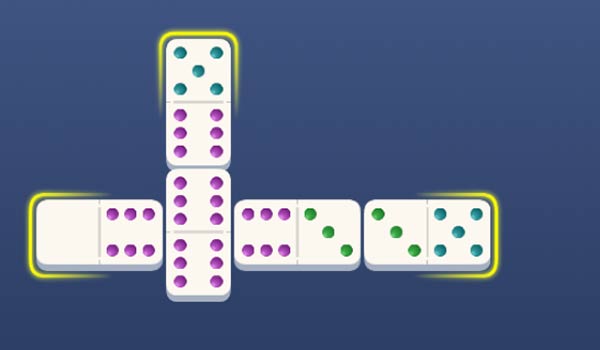 Dominoes Online
PLAY THE BROWSER GAME
Ready to play Dominoes Online?
Match tiles and outplay the computer in three classic modes. The linked browser version opens on its publisher’s website in a new tab.
THE SHORT VERSION
Dominoes Online at a glance
This Dominoes Online listing links to Cool Dominoes by Coolmath Games, a browser game against computer opponents. Choose Classic, All-Fives, or Block, then match numbered tile ends and adapt to the scoring and boneyard rules of the selected mode.
Related games
Explore Logic



Dominoes Online can mean many different sites and rule sets. This page links to Cool Dominoes by Coolmath Games, a browser version against computer opponents with Classic, All-Fives, and Block modes. Learn the shared tile-matching basics first, then check the selected mode before you plan your next move.
Which Dominoes Online game is this?
The Play button points to CoolDominoes.com, a dedicated Coolmath Games site. Its browser game pits you against bots and lets you select Classic, All-Fives, or Block. Those variants share numbered tiles and matching ends, but they reward different decisions. This is one publisher's playable implementation, not the single official home of dominoes as a traditional game. CasualAtlas does not host the board or offer a human multiplayer mode for this listing.
A standard double-six set contains twenty-eight tiles, with values from blank through six on each side. In a familiar two-player double-six arrangement, each player starts with seven tiles. The linked game describes getting your tiles onto the board to win a round and reaching a point target to win the match. Check the current game screen for its exact scoring and turn order, especially when switching between modes.
How a turn works
Look at the two exposed ends of the chain. To play, choose a tile whose one side matches an open end, then place it so the chain continues with the tile's other value. A double has the same number on both halves and may be displayed crosswise for readability. Do not assume you can attach a tile anywhere along the chain; ordinary matching applies to the open ends unless a particular variant says otherwise.
If no tile fits, the next step depends on the selected rules. In Classic, you draw tiles from the boneyard when you cannot move until you find a matching piece under the game's rules. In Block, drawing is not the rescue mechanism; a player who cannot move passes. Read the current interface before clicking repeatedly, especially if you switch variants between sessions.
Classic, All-Fives, and Block
Block emphasizes managing a closed hand. You cannot rely on fresh tiles to escape a poor mix, so keeping access to multiple numbers matters. If neither player can move, the round is blocked and the remaining pips help determine the outcome. The game can finish before anyone empties their hand, making tile distribution and what your opponent may hold strategically important.
Classic uses a boneyard, which softens a dead end but can make your hand heavier. All-Fives adds a scoring target: the exposed ends can create totals divisible by five, awarding points under the chosen implementation. A tile that seems ordinary in Classic may be valuable in All-Fives because it changes the end total. Check the publisher's scoring display, since conventions for doubles and end counting vary between house rules.
Plan around the numbers in your hand
Before playing the first matching tile you see, count which numbers you hold repeatedly. If most of your pieces connect to six, keeping a six exposed may preserve several future options. If you have only one route into a rare number, think carefully before closing it. A flexible tile can connect two families of numbers; spending it early might make your later hand harder to play.
Watch what the computer cannot play or when it has to draw or pass. Those events offer limited information about missing numbers, although a draw changes its hand. You cannot see the hidden tiles, so treat these clues as probabilities rather than certainties. In a blocked position, reducing your own remaining pip total can be more valuable than holding a high tile for a speculative future move.
A useful first-session routine
Begin with Classic if you want to understand the basic chain without an extra scoring target. Name the two open ends after every move and scan your hand for both values. Once you can predict which tiles remain playable, try Block to see how losing the draw option changes decisions. Only then move to All-Fives, where a good play must consider the immediate score as well as what numbers you leave exposed.
An early loss is often more instructive than a quick win. Look at the tiles left in your hand: did you keep too many high-pip pieces, remove your only bridge to a number, or ignore a pass from the opponent? Those observations turn tile placement into a planning problem. If you want a different two-player-style grid challenge afterward, this directory also lists a Battleship Online browser version.
Where to play and what is not included
Use the Play Dominoes Online button to open CoolDominoes.com in a new tab. Coolmath Games describes it as a focused, ad-free browser home for its Dominoes game. CasualAtlas supplies a directory entry, a local copy of the publisher's game thumbnail for identification, and this independent guide. It does not copy the game engine or manage your scores.
If you are specifically looking for live human opponents, do not assume this linked version provides them. Choose a service that explicitly offers multiplayer instead. If you are learning, the computer-opponent format is useful because you can restart and compare different rule sets at your own pace. Always read the mode label before applying advice from a different dominoes variant or a family house rule.
Dominoes Online questions, answered
01Which site does Play Dominoes Online open?
It opens CoolDominoes.com, the Coolmath Games site for this browser version.
02Can I play against a human here?
This listing links to a computer-opponent version; it does not promise human multiplayer.
03Which variants are available?
The publisher currently lists Classic, All-Fives, and Block.
04What is the boneyard?
The face-down reserve of tiles used for draws in variants that allow them.
05What happens when I cannot move in Block?
You pass rather than drawing; a fully blocked round can be settled by remaining pips.
06How is Classic different from Block?
Classic lets you draw from the boneyard when you cannot match an open end; Block makes you pass.
07What is the goal in All Fives?
Besides shedding tiles, you score by making eligible exposed-end totals divisible by five.
08How many tiles are in a double-six set?
A complete double-six set has twenty-eight unique tiles.
09Do I need to install an app?
The linked publisher offers browser play without a download.
10Does CasualAtlas save my match?
No. The linked publisher runs the game; CasualAtlas only provides a guide and destination link.
Rules and live game: linked publisher website . CasualAtlas is an independent guide and is not affiliated with the publisher.