Colorfle is a visual deduction game about mixing colors toward a hidden target. Each attempt provides feedback on how close the blend is, making the puzzle a practical exercise in hue, saturation, proportion, and careful adjustment.
Colorfle quick reference
Goal
Use color-mixing feedback to work toward a hidden target color.
Match tiles and outplay the computer in three classic modes.
EDITOR'S TAKE
A quiet board-game break with enough tactical choices to stay interesting, even when you only have time for one round.
5–10 min
Easy start
Colorfle turns a target color into a composition puzzle. Instead of simply choosing a shade by eye, you infer which colors were mixed and in what proportions, then use the game’s feedback to improve the next attempt.
Start Colorfle in three steps
Inspect the target and the color choices offered by the game.
Submit a mixture and read the feedback.
Adjust your next attempt based on hue, brightness, and the proportions you have already tested.
For the current rules and available modes, consult the Colorfle publisher. The steps above are CasualAtlas’s summary.
What is Colorfle?
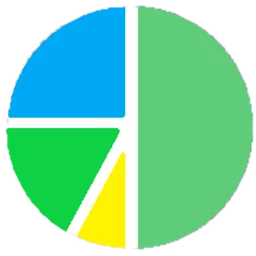
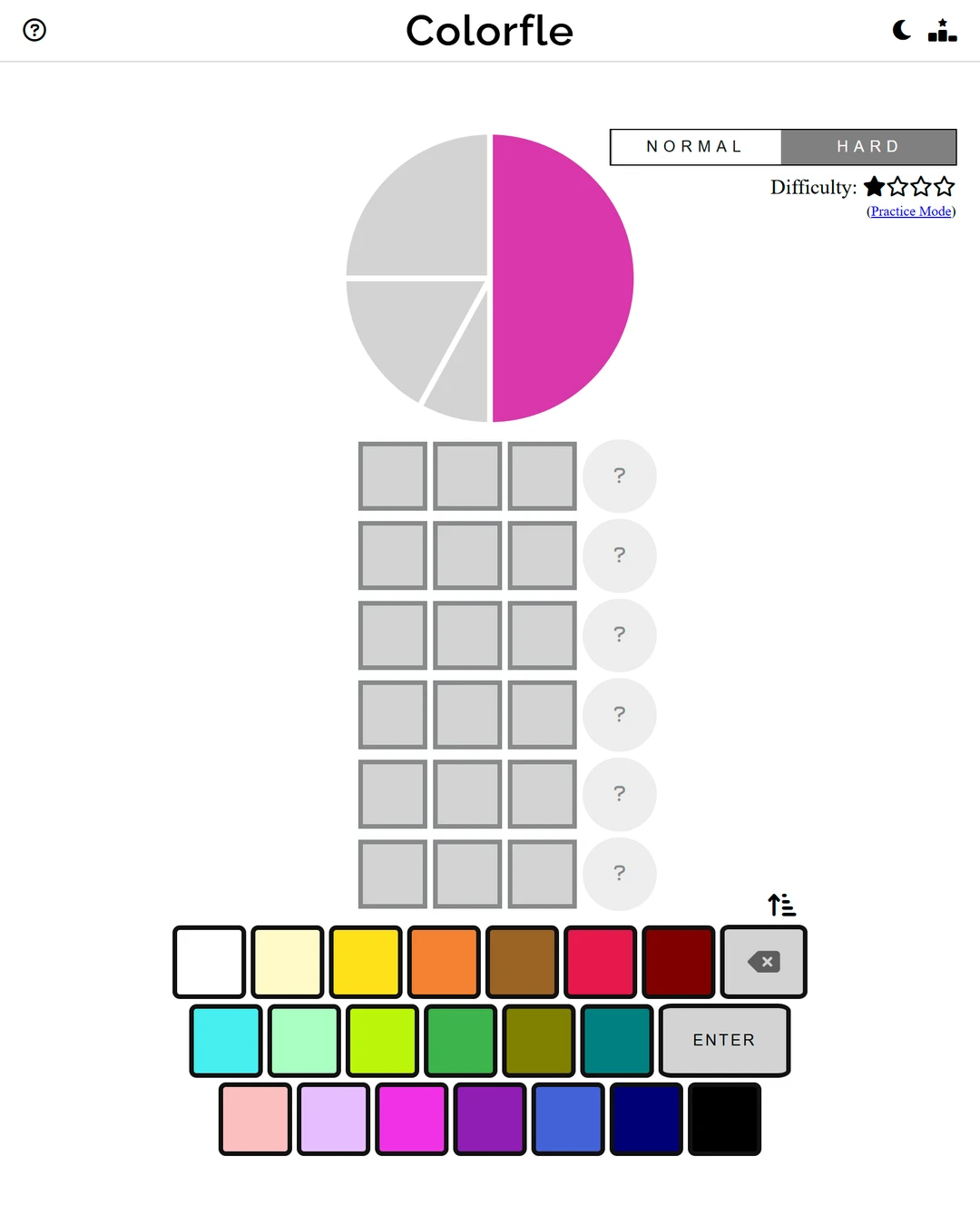
Colorfle is a daily visual deduction game in which the target is made from three different component colors. You propose a mixture, submit it, and compare the resulting color with the target. The official rules currently allow six tries. A guess is therefore both a color match and an experiment about composition: which ingredients belong in the mix, and how should their shares be divided?
The interface makes color intuition testable. You might feel that a target is warmer or cooler than your current mixture, but the feedback helps separate a missing ingredient from a poor ratio. That distinction is important because changing everything at once makes it hard to learn from a guess. A good round feels less like blind painting and more like a small controlled experiment.
How to play Colorfle
Start by examining the target without staring at the palette. Decide whether its dominant impression is warm, cool, light, dark, muted, or vivid. Select three candidate colors and set their proportions. Submit the mixture, then read the resulting color and the game’s component feedback before touching the next guess. The official help explains that correct colors in the right position receive different feedback from correct colors placed incorrectly, while colors absent from the target are not highlighted.
Use that signal to make a specific revision. If the ingredients look plausible but the outcome is too warm, reduce the warm component rather than replacing every swatch. If one ingredient is clearly wrong, keep the other evidence and swap only that part. The fewer unrelated changes you make, the more informative the next result becomes. Continue until you match the target or use the available attempts.
Understand color accuracy and position clues
The color shown after a guess is a result of your proposed mixture, not merely a decorative preview. Compare it directly with the target: is the hue displaced, is the saturation too strong, or is the brightness different? Color accuracy gives a useful overall comparison, but it should be read alongside component clues. A high similarity score can still come from the wrong recipe, while a weaker-looking guess may identify an ingredient correctly.
Position feedback narrows the search further. When a color belongs in the mixture but occupies the wrong slot, moving it can be more valuable than introducing a new color. When a color is already in the right position, preserve that information for the next attempt. If a previous guess was better, the official interface lets you compare against it; use the comparison to avoid oscillating between two nearly identical recipes.
A six-try strategy for better mixtures
Treat the first guess as a diagnostic. Choose a reasonable combination that tests your broad impression of the target, not an extreme mixture that reveals little. On the second guess, focus on ingredient membership and position. Only after the components are more certain should you spend several attempts tuning proportions. This order avoids the common mistake of perfecting a ratio for a color that does not belong in the answer.
Human color perception is sensitive to context. A patch can appear lighter or greener beside a different background, so compare the target and your result in the same interface when possible. If you are stuck, describe the direction of the error in words: “too blue,” “not enough yellow,” or “too saturated.” A small, named correction is easier to evaluate than a collection of random slider movements.
Where to play and what to explore next
The official Colorfle site hosts the live daily puzzle and a practice mode. Follow the Play Colorfle link above for the current rules and result screen; CasualAtlas supplies this independent guide but does not run a copy of the color-mixing engine. The publisher says a new daily Colorfle appears at a time based on your local clock, so check the live site rather than relying on a timer copied elsewhere.
For another visual challenge, Scrandle asks you to compare two food photographs and predict an audience preference. Framed uses a movie still as an image-recognition clue. If Colorfle’s appeal is the iterative feedback rather than visual art, Betweenle offers a word-based narrowing problem. Each game makes you update a hypothesis after a small piece of new evidence.
Colorfle questions, answered
01How many guesses do I get in Colorfle?+
The official daily rules currently allow six tries.
02How many component colors form the target?+
The target is made from three unique colors.
03Is this only about matching the visible shade?+
No. The mixture’s component colors and their proportions matter too.
04What does a green component clue mean?+
According to the official help, that color is correct and in the right position.
05What does a yellow component clue mean?+
The color belongs in the target but occupies the wrong position.
06Why was a color not highlighted?+
The publisher’s help says unhighlighted component colors are not in the target.
07Can I practice outside the daily puzzle?+
The official site currently provides a practice mode.
08Should I change all three colors after a miss?+
Usually not; preserve confirmed clues and change one meaningful variable at a time.
09Does CasualAtlas calculate the answer?+
No. This is an independent guide linking to the original game.
10What similar visual games are listed?+
Try Scrandle for image comparison or Framed for movie-still recognition.
Rules and live game: official Colorfle website . CasualAtlas is an independent guide and is not affiliated with the publisher.