Name that tune · Music game

Songless
 Songless
THE ORIGINAL DAILY GAME
Ready for today’s Songless?
A tiny sound. A very big lightbulb moment. The original game opens on its publisher’s website in a new tab.
THE SHORT VERSION
Songless at a glance
Songless is a daily music-recognition challenge that starts with only a fraction of a second of audio. A wrong guess or skip reveals more of the recording, rewarding players who can recognize rhythm, production, instrumentation, or a vocal cue before the full hook arrives.
Related games
Explore Music



Songless asks you to identify music from a very short opening clue. This listening guide breaks the clue into rhythm, instrumentation, production, melody, and voice so you can use each extra fragment more deliberately.
What is Songless?
Songless is a music-recognition game that begins with a tiny piece of audio. The first fragment may be too short to reveal a melody, so early guesses often depend on texture: a drum sound, a guitar attack, a synth tone, a breath, or the ambience around the recording. More audio becomes available when the first clue is not enough.
The pleasure comes from the moment a vague sound becomes a specific memory. Because popular songs often have recognizable production details before the vocal begins, a fraction of a second can sometimes be enough. Other tracks reveal themselves only after the rhythm or melody develops.
How to play Songless
Play the shortest available clip once without trying to force an answer. On the second listen, identify the type of sound and its position: percussion, bass, harmony, lead instrument, vocal, or studio effect. Enter a guess if the clue is distinctive; otherwise reveal the next fragment and repeat the process.
Use headphones when possible, especially in a noisy room. Keep the volume comfortable and avoid rapid repeated playback, which can make an uncertain impression feel more convincing without adding information. Each longer clip should answer a specific question you formed during the previous listen.
Five clues hidden in a short intro
Start with rhythm. Tempo and groove can narrow the genre and era. Then identify instrumentation: an acoustic guitar, compressed electronic kick, orchestral string, or dry piano suggests a different pool of songs. Production is another clue; reverb, stereo width, distortion, and recording noise can hint at a decade or style.
Melody becomes useful when two or three notes form a recognizable contour. A voice is even more specific, but listen for delivery before assuming an artist: breathiness, accent, harmony, and processing can mislead. Finally, consider silence and count-ins. The way a recording begins can itself be a familiar signature.
A better guessing routine
After each listen, describe the sound in plain language before naming a song. “Muted guitar with a loose drum entrance” is more useful than “it feels familiar.” That description gives you something concrete to compare with your memory and reduces the urge to submit the first title that appears in your head.
When several songs fit, compare their exact openings rather than their choruses. Music memory tends to jump to the most famous section, while the game is testing the recorded intro. If you reveal more audio, pay attention to what changed: a new instrument, a chord movement, a lyric, or a clearer pulse.
Where to play and related games
CasualAtlas does not host or copy the Songless music catalog. Follow the official publisher link from the Songless listing to play the current game. This page is an independent listening guide and does not publish licensed clips, daily solutions, or an imitation game.
Bandle is a natural follow-up because it reveals a song through its instrumental layers. Framed applies a similar progressive-recognition idea to films, while GuessThe.Game uses screenshots from video games. Each rewards observation, but the evidence arrives through a different sense.
How to learn from a missed Songless guess
A missed guess is useful when you compare the clue you heard with the actual opening. Ask which feature sent you in the wrong direction. Was the drum sound common to an era, did a cover or sample resemble another recording, or did you remember the chorus instead of the intro? Naming the mistake turns recognition into a skill instead of a lucky flash of memory.
Build a small mental library of beginnings rather than whole songs. Notice tracks that start with silence, a count-in, a single processed note, room noise, or an isolated vocal. Songless rewards this narrow kind of listening. Over time, you become quicker at distinguishing an artist’s production habits from genre conventions that appear across many recordings.
Songless questions, answered
01Is Songless hosted on CasualAtlas?
No. CasualAtlas links to the official game and provides this independent listening guide.
02What should I listen for first?
Identify sound type and rhythm before trying to name a song.
03Do headphones help?
They can make quiet production details easier to hear, but keep the volume comfortable.
04When should I reveal a longer clip?
Reveal more when it can answer a specific question about the instrument, rhythm, melody, or voice.
05Does this page include today’s Songless answer?
No. It contains no official audio or daily answers.
06What game is similar to Songless?
Bandle is another music-recognition game, while Framed and GuessThe.Game use progressive visual clues.
07How many guesses does Songless allow?
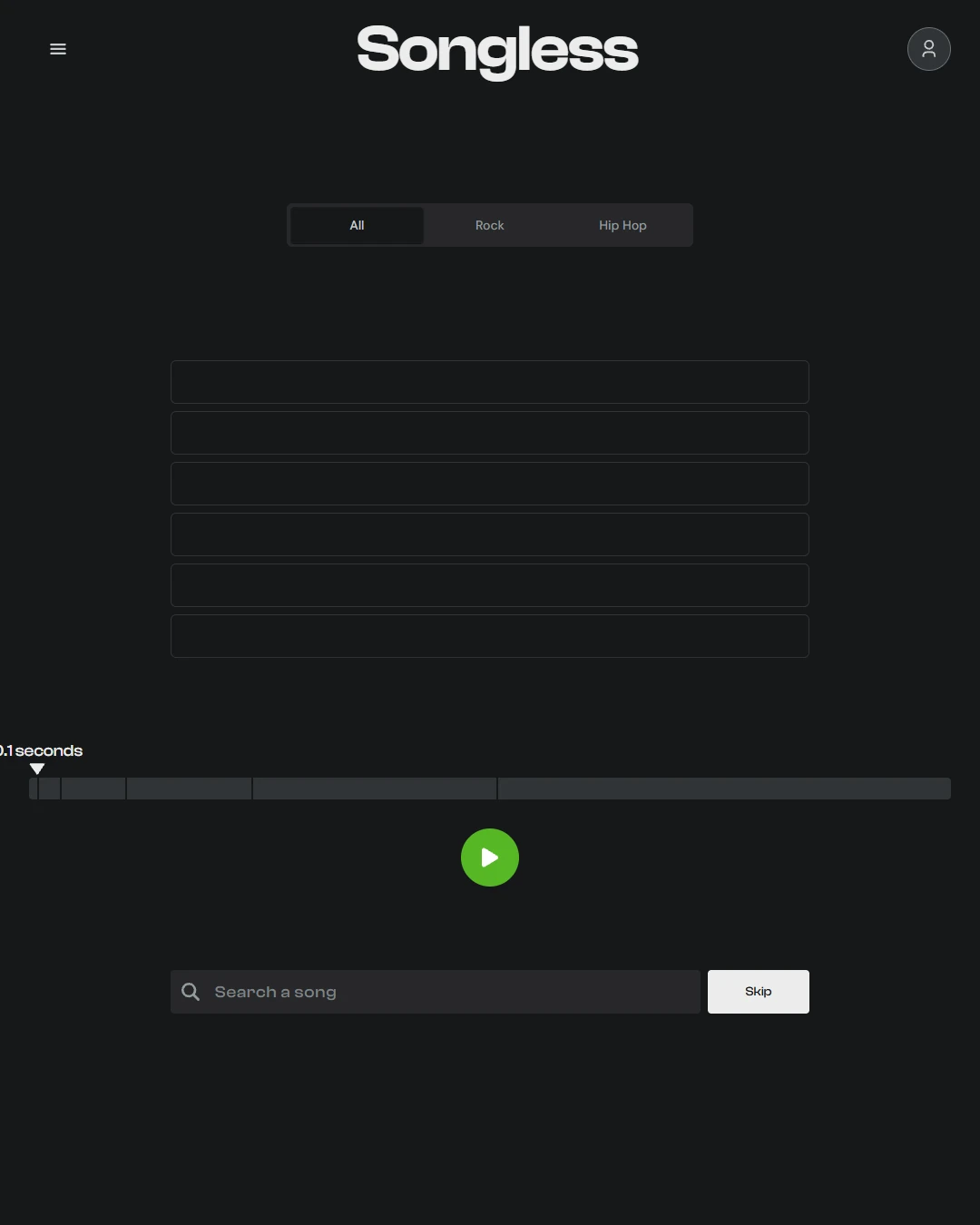
The current official format provides six stages, beginning with a 0.1-second clip and revealing more audio after a wrong guess or skip.
08Is Songless free?
The official browser game describes itself as free and does not require an account to start a daily puzzle.
09Does Songless have different genres?
The official site currently lists separate daily lanes including all genres, rock, and hip hop.
10When does the Songless puzzle change?
The official site currently states that a new puzzle appears daily at midnight UTC.
Rules and live game: official Songless website . CasualAtlas is an independent guide and is not affiliated with the publisher.